
How to Unfreeze Frozen Shower Water Pipes
Updated September 18, 2026
How to Unfreeze Frozen Shower Water Pipes
Frozen shower water pipes are not just an inconvenience that can happen in the winter, but a serious concern that needs to be addressed right away. Ice forms in the water lines that supply the shower. If a frozen water pipe bursts, the repair can be expensive.
In this article, we will discuss signs that a shower water pipe is frozen, outline how to thaw frozen water pipes yourself, from safety precautions to materials and thawing methods, and give you tips to prevent freezing from occurring in the future.
Signs Your Shower Water Pipe is Frozen
A frozen shower water pipe blocks the water supply to the shower. Catching it early matters because the water pipe can burst if the ice is left in place. Signs to look out for include:
- No water or a weak trickle — The shower faucet is open, but little or no water comes out because ice is blocking the water pipe.
- Only hot or only cold is affected — One supply line is frozen while the other still runs.
- Other fixtures still work — Sinks and toilets in the same home have normal flow, which points to the shower water pipe rather than the whole-house supply.
- Frost or a bulging pipe — Visible frost, or a swollen section, on an exposed water pipe near an exterior wall is a common freeze point.
Safety Precautions Before Starting
Before you begin to unfreeze a shower water pipe, take these precautions:
- Turn off the main water supply if you suspect a split — Shutting the main valve reduces pressure on the frozen water pipe and limits flooding if the pipe has already cracked.
- Open the shower faucet — An open faucet relieves pressure and gives melting water a place to flow as the ice clears.
- Keep electric heat away from standing water — If you use a hair dryer, heat gun, or space heater, keep the area dry so you do not risk electric shock.
Tools and Materials Needed
The tools you need depend on which thawing method you use. This list covers the methods in the next section:
- Hair dryer or heat gun
- Electric heat tape
- Space heater
- Towels or a heating pad
Step-by-Step Thawing Methods
These methods warm the frozen water pipe itself. Start nearest the open faucet and work back toward the frozen section so water can move as the ice loosens. Do not pour anything into the shower expecting it to reach a water pipe inside the wall.
Hair Dryer or Heat Gun
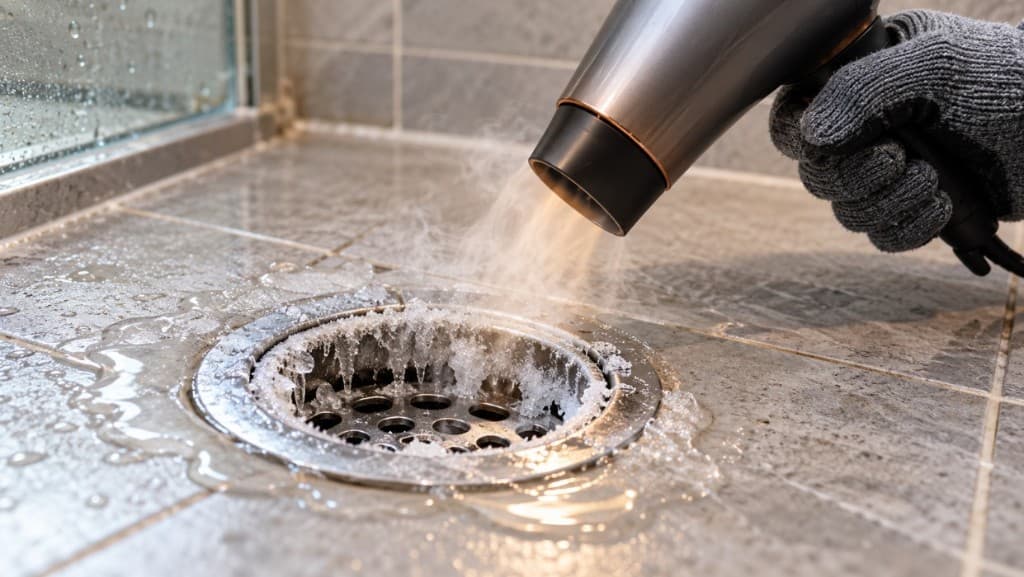
Aim a hair dryer or heat gun at the frozen section of the water pipe. Keep the tool moving and use a low or medium setting. Begin closest to the open shower faucet and work toward the coldest part of the pipe so melting water can escape.
Electric Heat Tape
If you can reach the water pipe, wrap electric heat tape around the frozen section and follow the product instructions. This warms the water pipe directly.
Space Heater
If the frozen water pipe is inside a cabinet, crawlspace, or an accessible basement area, place a small space heater nearby to raise the air temperature and thaw the pipe slowly. Do not leave it unattended.
Warm Towels or a Heating Pad
Soak towels in warm water, wring them out, and wrap them around the exposed water pipe. Replace the towels as they cool. A heating pad wrapped around the pipe works the same way and avoids a sudden temperature shock that can crack the water pipe.
What NOT to Do
Thawing a shower water pipe yourself can go wrong. Follow the precautions above, and also avoid these:
- Open flames — A blowtorch is a fire hazard and can melt or crack the water pipe.
- Chemical cleaners — They will not melt ice inside a water pipe, and they do not belong in the water supply.
- Boiling water on a closed pipe — A sudden blast of boiling water can crack a frozen water pipe. Use gentle, steady heat instead.
Prevention Tips
To help keep shower water pipes from freezing again:
- Insulate the water pipes — Seal cracks and gaps in ceilings, walls, and floors so cold air stays out. Wrap insulation around exposed water pipes.
- Let the faucet drip — A steady drip keeps water moving through the water lines during extreme cold.
- Open cabinet doors on exterior walls — Warmer room air can reach the water pipes behind the shower or vanity.
Final Thoughts
The steps above are for a frozen shower water pipe. If you cannot find the frozen section, water will not start flowing, or you see a leak, stop and call a plumber. At City Rooter, we offer 24/7 plumbing services for a burst pipe or any kind of emergency, day or night.
Contact us today!